
Freelancing is one of the best ways to make money online. Finding freelancing clients as a beginner is a little harder. Because you’re just getting into the freelancing world, and you might not even know where to find freelancing clients or which platforms work best for beginners to find freelancing clients.
When I started my freelancing career, I also faced a similar phase; it took effort to find my first freelancing client. And on the Internet, we hear about too many options for finding freelancing clients. But sometimes, the overflow of information just confuses us, and you might wonder which platforms are good for beginner freelancers to find clients easily.
Once you have gone through the process of finding freelancing clients and working with them, you will get the experience, and then it will become easy for you to find new clients as a freelancer. But initially, you need to put a little extra time and effort into finding freelancing clients.
In this guide, I will share the top 4 ways that are perfect for beginners to find freelancing clients. So, let’s get started.
How To Find Freelancing Clients?
1) LinkedIn
LinkedIn is my all-time favorite platform to find freelancing clients. Because this is the platform from which I get the most number of clients so far in my 5-year career in freelancing. Well, I have not got my first client through LinkedIn and will disclose the platform below through which I got my first client.
The way I use LinkedIn for finding freelancing clients is a bit different. I don’t prefer finding clients through LinkedIn jobs. And the reason behind that, the response from there is very low as compared to the other method, which I use to find clients on LinkedIn.
So, how do I find clients on LinkedIn?
I just search for posts instead of going on a LinkedIn job and applying filters. Below is how I find the actual hiring posts on LinkedIn.
You can search for keywords like “hiring freelance writer”, “hiring freelance video editor” in the search bar. And next, you can choose “posts”.
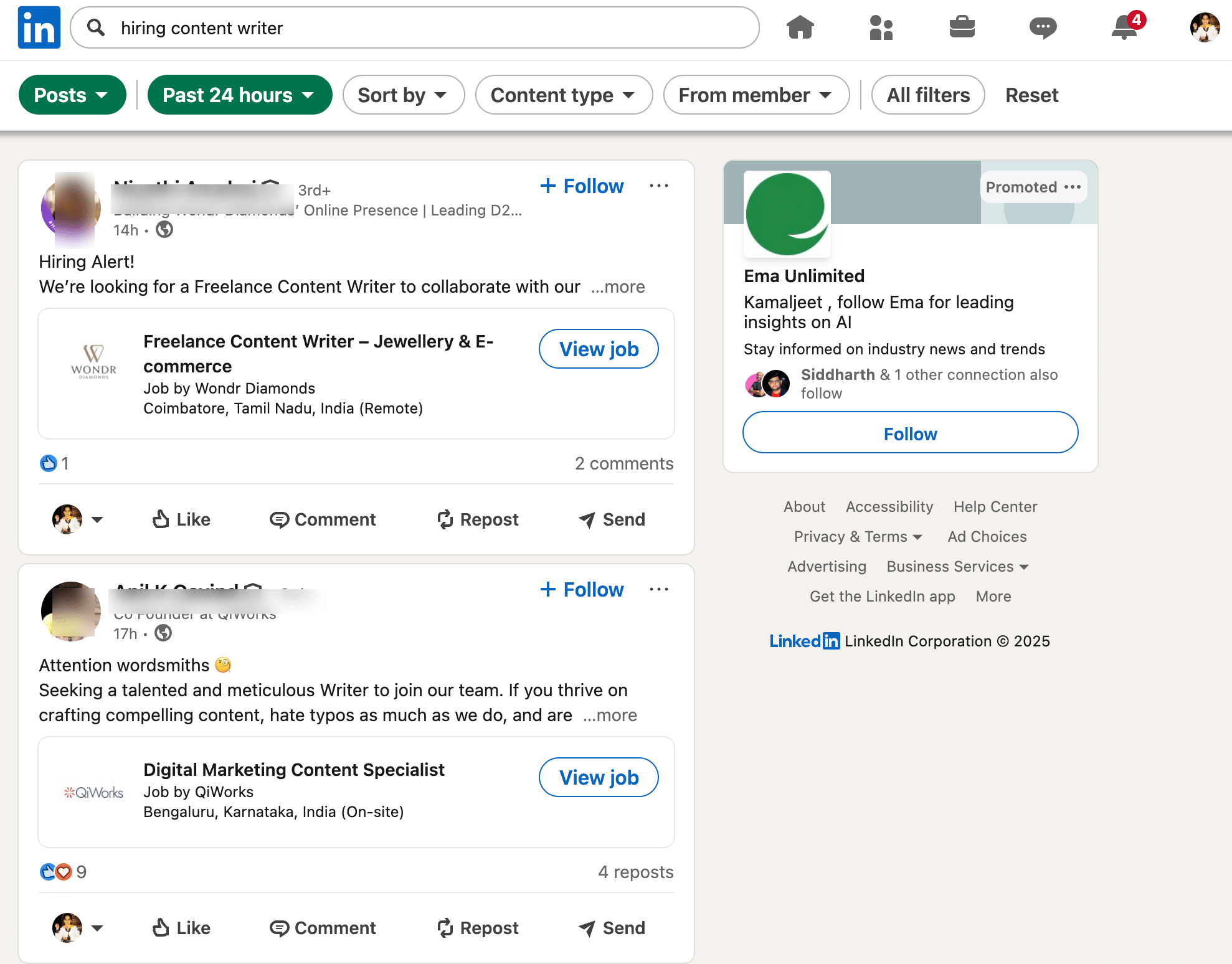
Now you will see the related hiring posts, but to make it more effective, apply some filters. You can sort the posts by top match or latest posts related to the searched keyword.
Next, you can also filter the posts based on time, such as the last 24 hrs, the past week, or the past month. I usually prefer to see posts from the last 24 hrs, because these are fresh hiring posts and the chances are high that they have not hired somebody else yet. I sometimes chose the past week to see if that freelance project is still available.
But I never chose the past month. Because most probably, that person had already hired someone.
If you’ve just created a new LinkedIn account and have very few connections, then you might see only limited hiring posts because your network is too small.
So, you can start connecting with people who are like your potential clients or connect with employees of companies for which you want to work. The idea is to grow your network on LinkedIn and connect with people who hire freelancers so you can actually start seeing their hiring posts.
And, growing your network on LinkedIn will also make your feed more helpful for finding potential freelancing clients. Because sometimes their post can also directly show up in your feed, as shown below, and you can just directly apply for that instead of spending time searching through posts.
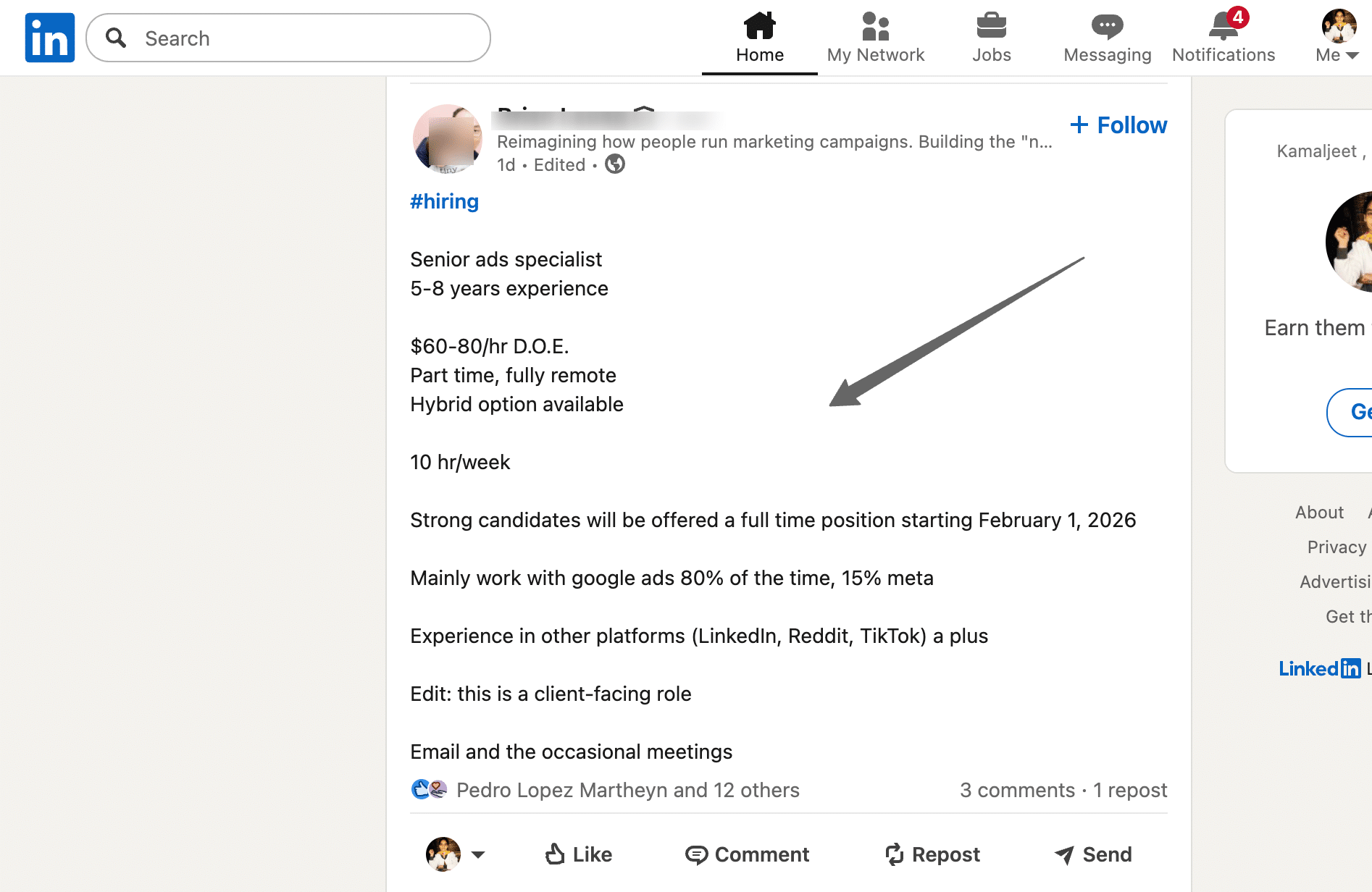
This method of LinkedIn worked very well for me, as I discussed earlier, and I get most of my clients through LinkedIn only.
2. Google Search
You might be wondering how we can find freelancing clients through a Google search. But this is one of the best ways to find potential companies that are hiring freelancers. This approach requires quality time, but if you find even a single client through this process, then it would be worth the time. Because, most companies hire freelancers on a long-term contract basis.
Most companies post their freelancing hiring post on their career page, and when you search for relevant keywords, their freelancing hiring post can be shown in Google search results. And this way, you can easily find the companies that are hiring freelancers for a particular role and apply for those contract-based roles after reading the job description.
This approach might not be perfect for every freelance skill. But you can try once if companies directly post the hiring post on their websites for your skills.
To find freelancing clients through Google search, you can go to Google and search for keywords like “hiring freelance skill name,” such as hiring freelance content writer, hiring freelance video editor.
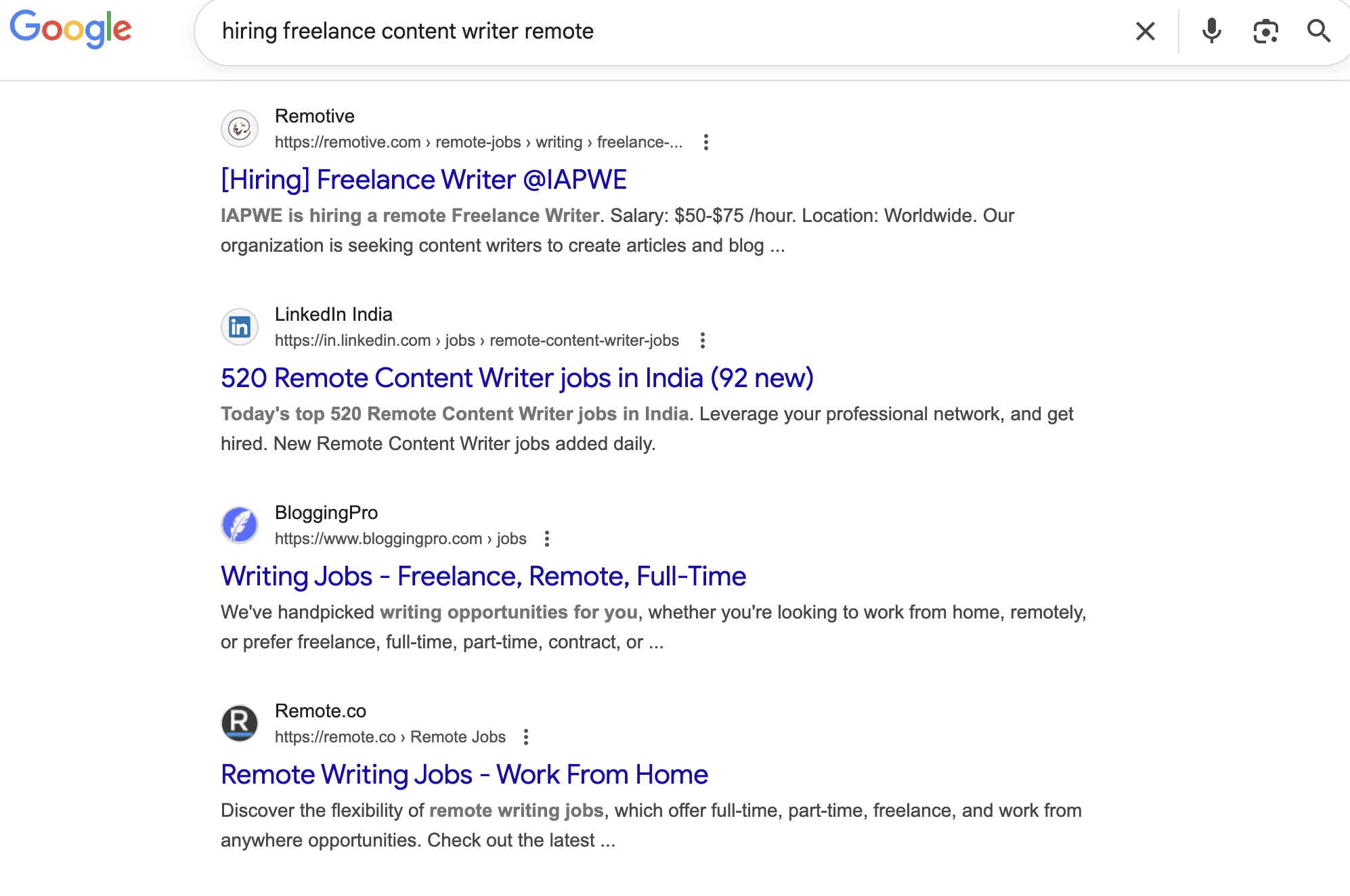
And now you can see the relevant results and companies that are hiring on a freelance basis for that role. One by one, you can go to their website page, read the description. And if it sounds good, you can apply for it.
3) Facebook Groups
You can also find freelance gigs on Facebook through groups. But nowadays, most of the Facebook groups have more spam posts. But Facebook is still a good starting point. But beware of Spam. Back in 2020, when I started my freelancing journey, I also got my first client from Facebook only.
For almost every industry, there are freelance groups on Facebook, which you can join. I currently don’t use Facebook groups to find clients. I personally prefer LinkedIn compared to any other way of finding freelancing clients.
So, how can you find clients on Facebook?
Log in to your Facebook account and search for relevant Facebook groups related to your freelance skill. For example, if you’re a content writer, you can search for those groups, or if you’re a freelance video editor, you can search for a video editor freelancing group, as shown below.
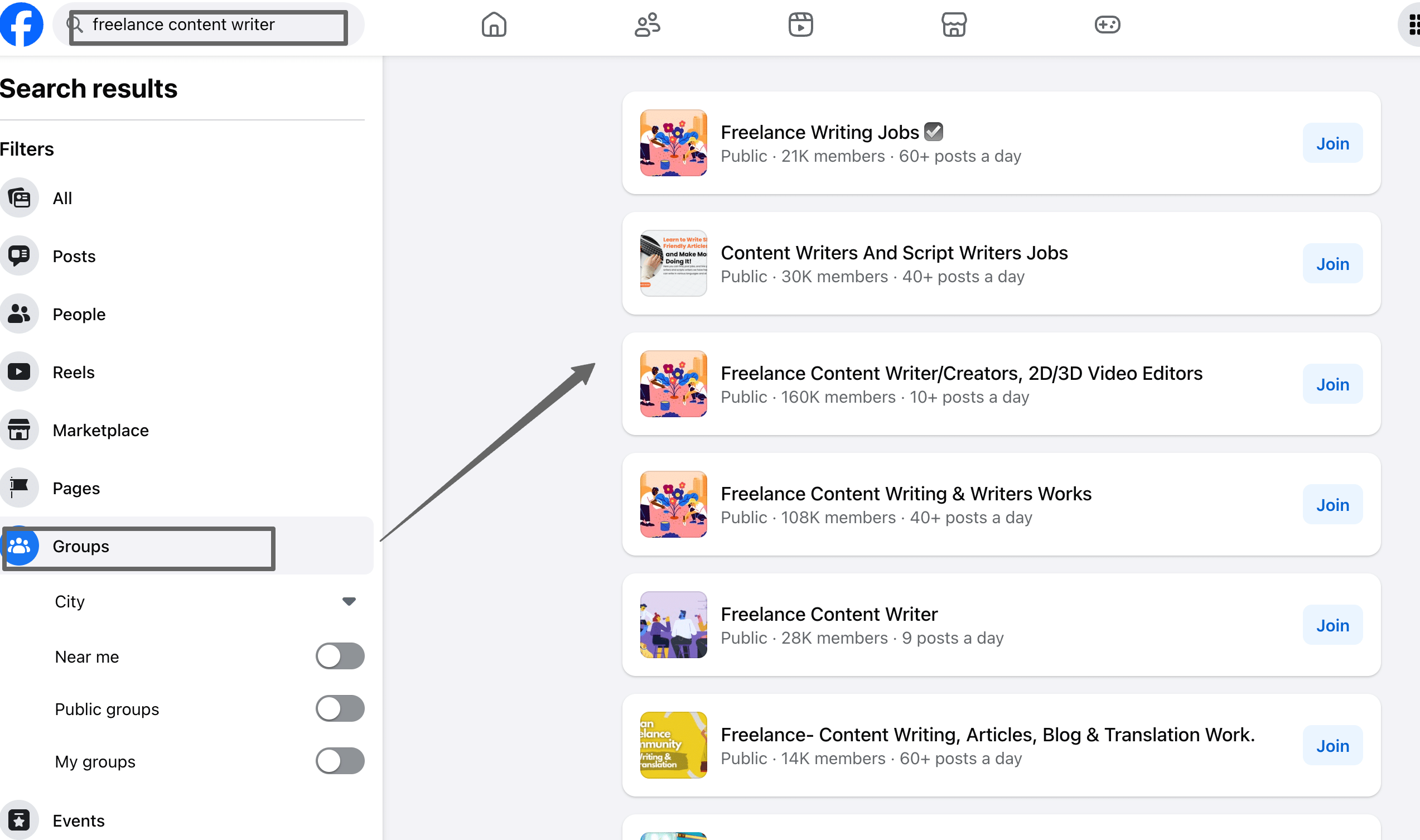
Now you can analyze which groups can be worth joining for you to find freelancing clients. Again, keep in mind that there are spam posts and BEWARE OF THEM.
4) Marketplaces like Upwork and Fiverr
I’m not a very big fan of freelance marketplaces, but platforms like Upwork and Fiverr worked very well for many successful freelancers. Some of the freelancers even build their marketing agency by getting consistent clients from Upwork. So, it indicates that these platforms have the potential to find freelancing clients.
So, you can try Upwork and Fiverr, but if you’re trying to work in any other marketplace. Make sure to do your research and find out if they are really genuine marketplaces. Because sometimes, people get stuck in fake marketplaces, and they spam new freelancers.
One thing you need to keep in mind is that Fiverr, Upwork, or any other marketplace is a middleman between you and your client. So, these marketplaces cut their costs. What does that mean? Whatever your client pays, these platforms cut their fee before sending your payment. And you can see on their website how much they deduct.
Another thing I analyzed about these platforms, especially with Fiverr, is that it’s hard to get long-term clients; these projects are one-off projects.
To achieve real success on these platforms, you need to learn how these platforms work and how you can easily get clients as a beginner.
For example, on Fiverr, you can’t directly apply for a project. Because on Fiverr, clients search for freelancers on a project basis and then place orders. So, to get clients on Fiverr, you actually need to build and optimize your profile for target keywords. So that your profile can actually show for relevant client searches.
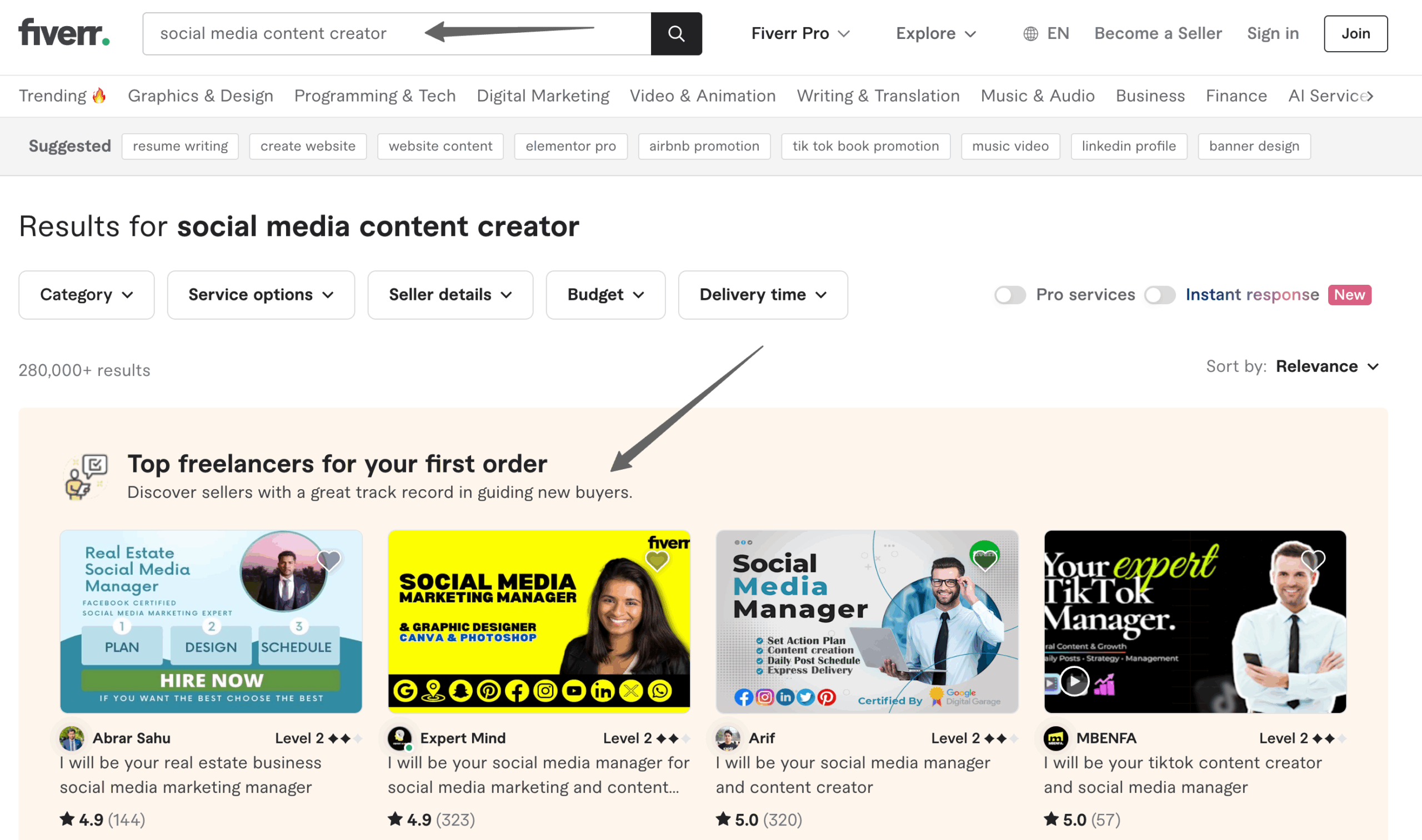
That means you have to learn how to optimize your Fiverr profile, and because of competition, it’s a little harder for new freelancers to get projects. But it’s not impossible, you can learn and implement the best practices to show your profile in search results.
The best tip to achieve success is that if you’re new to these platforms, then instead of competing for high-demand skills, you can go for new skills for which the competition is low and start getting projects for these skills.
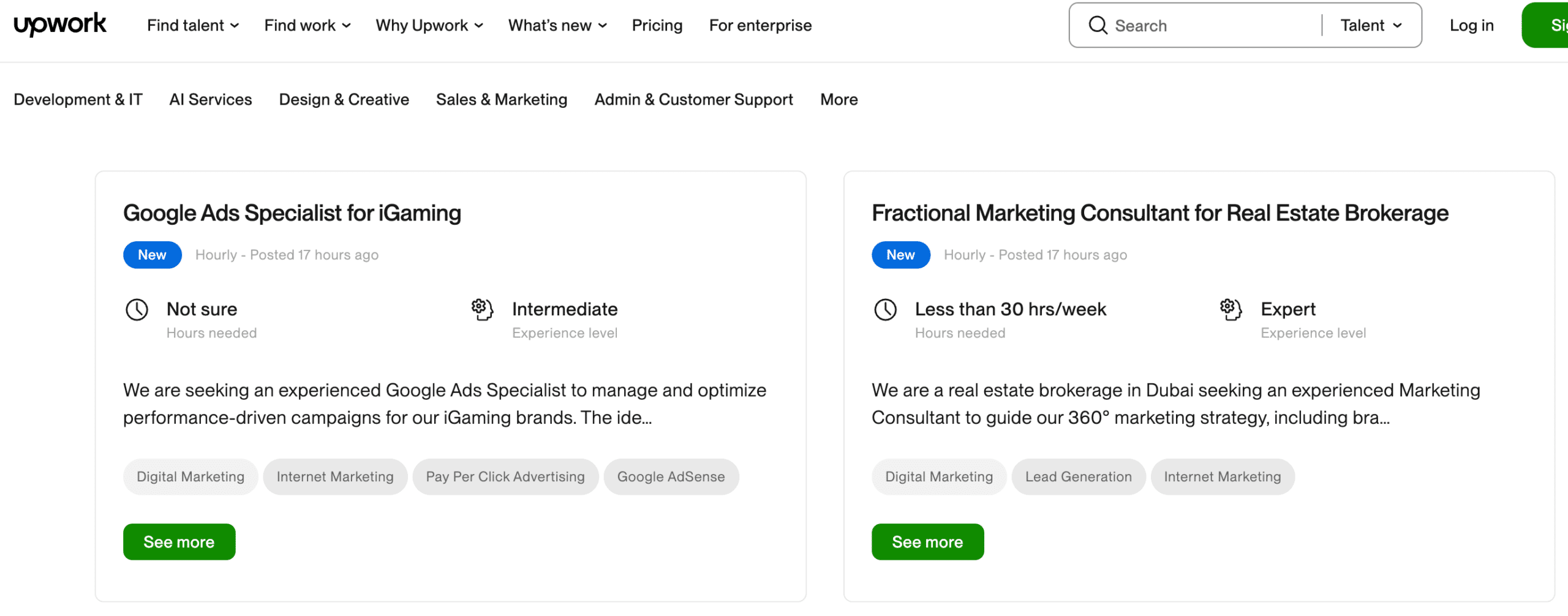
But on Upwork, you can apply for a project, which is great. But you can’t apply for as many projects as you want, because there is a limit on it. Each month, you will get some credits, and with these credits on you can only apply for limited projects. Once those credits are over, you have to either wait for next month or you can purchase extra credit.
Conclusion
Now you know how to find freelancing clients if you’re a beginner. But there are a few things that you should consider.
Freelancing is not a quick-rich scheme. So, you need to put consistent effort into learning and mastering your skills. And along with that, you also need to consistently put in efforts to find clients. This is a must.
So, make a routine, like every day you can spend around 1 hr to find and apply for clients. Doing freelance work is important, and along with that, you also need to consistently search for clients. Initially, I regularly spend quality time on LinkedIn to find and apply for new freelance clients.